


 LoginLogin
Engaging with our Stakeholders and
Fostering Action for Impact
We believe that meaningful engagement and strategic collaboration are essential to driving a resilient, sustainable real-economy transition. We actively support and contribute to national and global platforms that influence sustainability policy, private-sector action and regulatory direction.
Our involvement includes representation in key bodies such as:

By engaging with stakeholders through councils, events, consultations, surveys and direct partnerships, we gain crucial insights into their expectations and material concerns.
These collaborative relationships help ensure our strategies remain relevant, responsive and aligned with emerging sustainability challenges.
At FAB, we conduct materiality assessments in line with leading global standards to understand which environmental, social and governance topics matter most to our stakeholders and to our business. This process ensures our sustainability strategy remains focused, informed and responsive to evolving expectations.
Stakeholders identified the following seven topics as critical:
These insights directly inform FAB’s sustainability roadmap, guiding where we prioritize our efforts, resources and reporting.
Full results of the materiality assessment can be found on our annual ESG Report.

The influence of COVID 19 is evident as a result of the increase in topics such as:
Responsible lending and investing has gained prominence thanks to an increased awareness about its importance and the launch of FAB’s sustainable finance products.
Anti money laundering and corruption had the biggest drop in terms of level of importance, some reasons may be:
FAB conducts materiality assessments, in accordance with the principles developed by the Global Reporting Index (GRI). The objective of this exercise is to determine which environmental, social and governance (ESG) topics are most material to FAB. Results of our materiality assessments can be found in our annual ESG Reports.
FAB plays a leading role in advancing sustainability across the UAE and the wider region by actively participating in high-impact forums, national councils, climate platforms and industry coalitions. Through these engagements, we collaborate with government entities, international organizations, clients, SMEs and communities to help accelerate the transition to a low-carbon and resilient economy.

As the Principal Bank Partner of the IUCN World Conservation Congress in Abu Dhabi, FAB showcased its FAB’s Nature to Net Zero journey. Through panel discussions, activations, and thought leadership sessions, we highlighted the role of finance in driving conservation, supporting climate resilience, and enabling nature-positive outcomes.
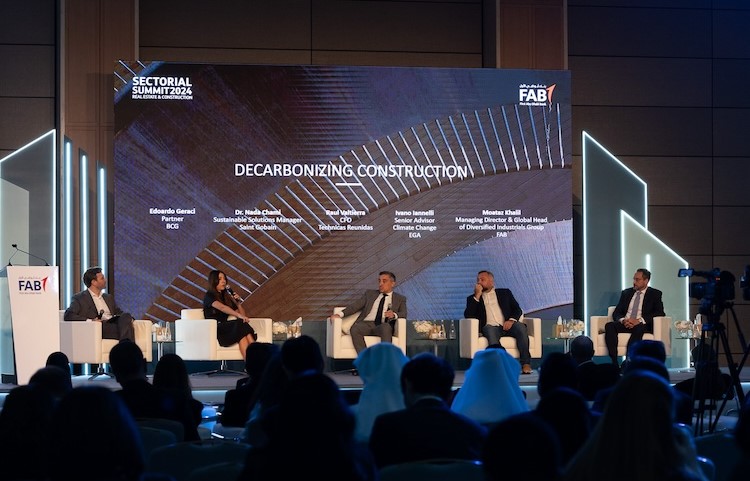
Our commitment to sustainability underscores our recognition of finance’s role in driving a low-carbon and equitable economy. We put this commitment into action through hosting flagship events - FAB Sectorial Summits. These events host executives and experts from across key UAE sectors and influential leaders in the region to explore challenges of decarbonization and opportunities of the transition through cross-sectoral collaboration and engagement.
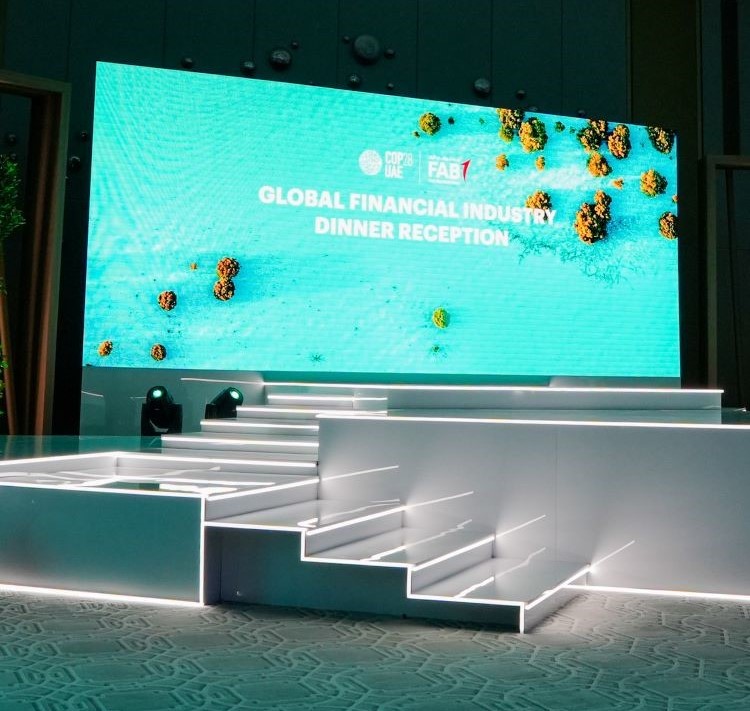
As a Strategic Pathway Partner at COP28, FAB convened global leaders, policymakers, and industry experts to accelerate progress on climate action. Our engagements focused on financing the transition, climate-aligned innovation, and resilience. FAB delivered high-level discussions and collaborative platforms that supported the global dialogue on net-zero pathways.
Explore FAB COP28 publications.
Following this, FAB also participated in the COP16 Convention to Combat Desertification in Riyadh and launched a whitepaper on water titled "Nature-positive pathways in MENA: Enhancing water sustainability and resilience".
FAB also represented the UAE’s transition journey at COP29 where the bank engaged in key discussions centered on climate finance, emissions reduction, and the UAE’s leadership in shaping regional climate ambition, strengthening our position as a leading financial institution supporting the transition.
FAB participated as the Gold Sponsor for the “Make it in the Emirates” Forum, reinforcing our commitment to advancing the UAE’s industrial growth and supporting national priorities. Through our sponsorship, we championed innovation, sustainable industrial development, and the role of finance in enabling future-ready industries across the nation.


